Ta Prohm, Angkor, Siem Reap, Cambodia
Angkor, Siem Reap, Cambodia
Panoramic Photo Collage
2000
27 x 45
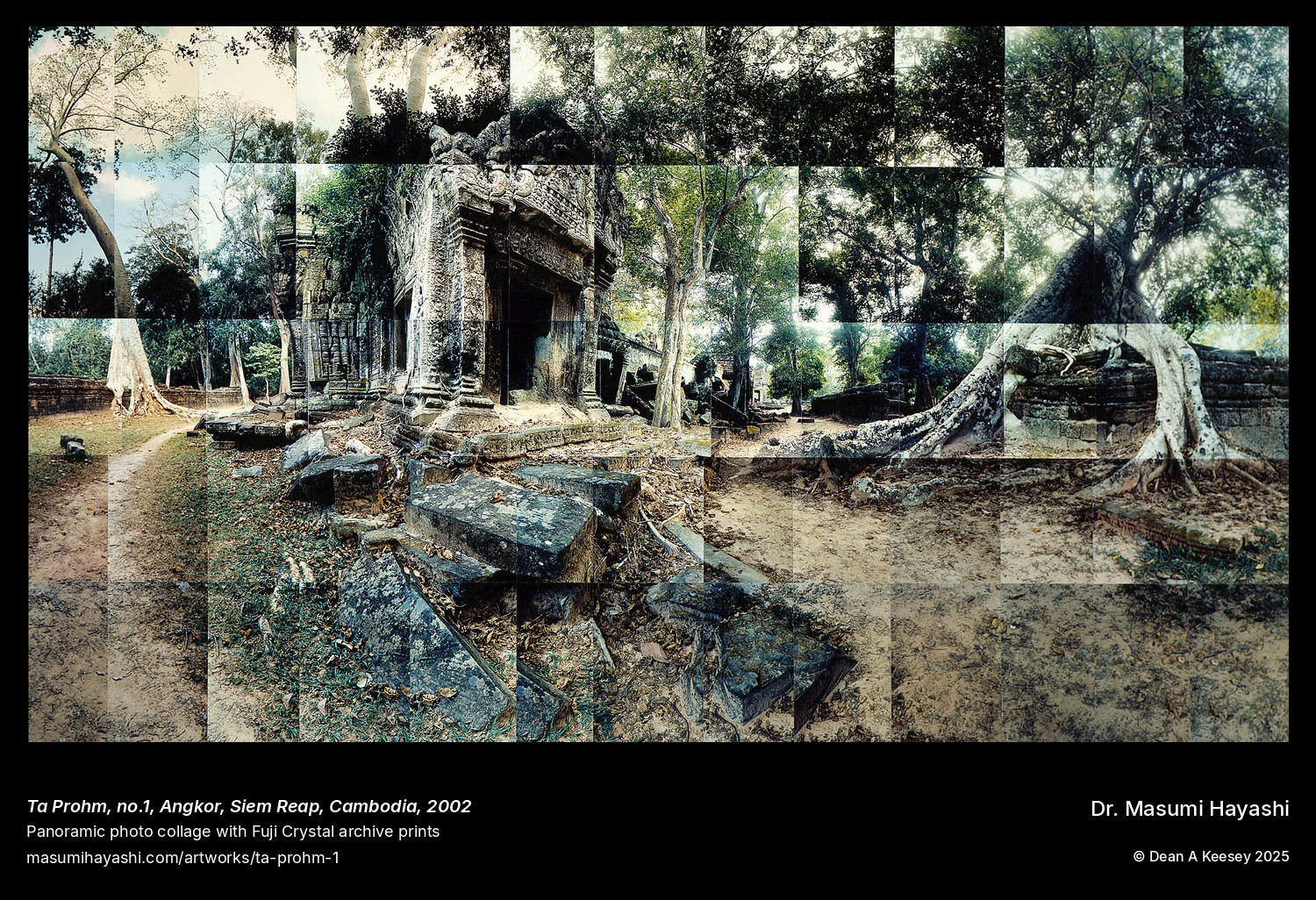
Ta Prohm presents a structural paradox. Massive spung tree roots flow over ancient gallery walls like frozen waterfalls. Strangler fig roots cascade through doorways like organic curtains. After 800 years, tree and stone have become inseparable—removing the trees would cause walls to collapse (roots now provide structural support), yet leaving them ensures eventual collapse through continued growth.
French conservators made a deliberate choice here: leave Ta Prohm partially unrestored, preserving the romantic “discovered” state rather than achieving archaeological clarity. This philosophical decision values nature’s transformation over purity, creating the temple’s defining aesthetic experience.
Founded in 1186 by King Jayavarman VII as Buddhist monastery dedicated to his mother (honored as Prajnaparamita, the Perfection of Wisdom), temple inscriptions record extraordinary institutional scale: 12,640 temple personnel, 79,365 total people serving this single complex. Such numbers reveal Angkorian civilization’s immense wealth and organizational capacity at empire’s peak.
Masumi photographed in 2000, before the Tomb Raider film made Ta Prohm one of the world’s most photographed archaeological sites. Her documentation captures quieter, pre-Instagram Ta Prohm—before mass tourism and social media transformed visitor experience.
The meditation on entropy here resonates with her internment camp work. Both practices examine how nature reclaims abandoned architecture, revealing impermanence of human construction. The contexts differ—tropical versus desert, 800 years versus 50, Buddhist devotion versus constitutional violation—but the contemplation of time, decay, and memory encoded in deteriorating buildings remains universal.