River Ganges, Varanasi, Uttar Pradesh, India
Varanasi, Uttar Pradesh, India
Panoramic Photo Collage
2000
19 x 62
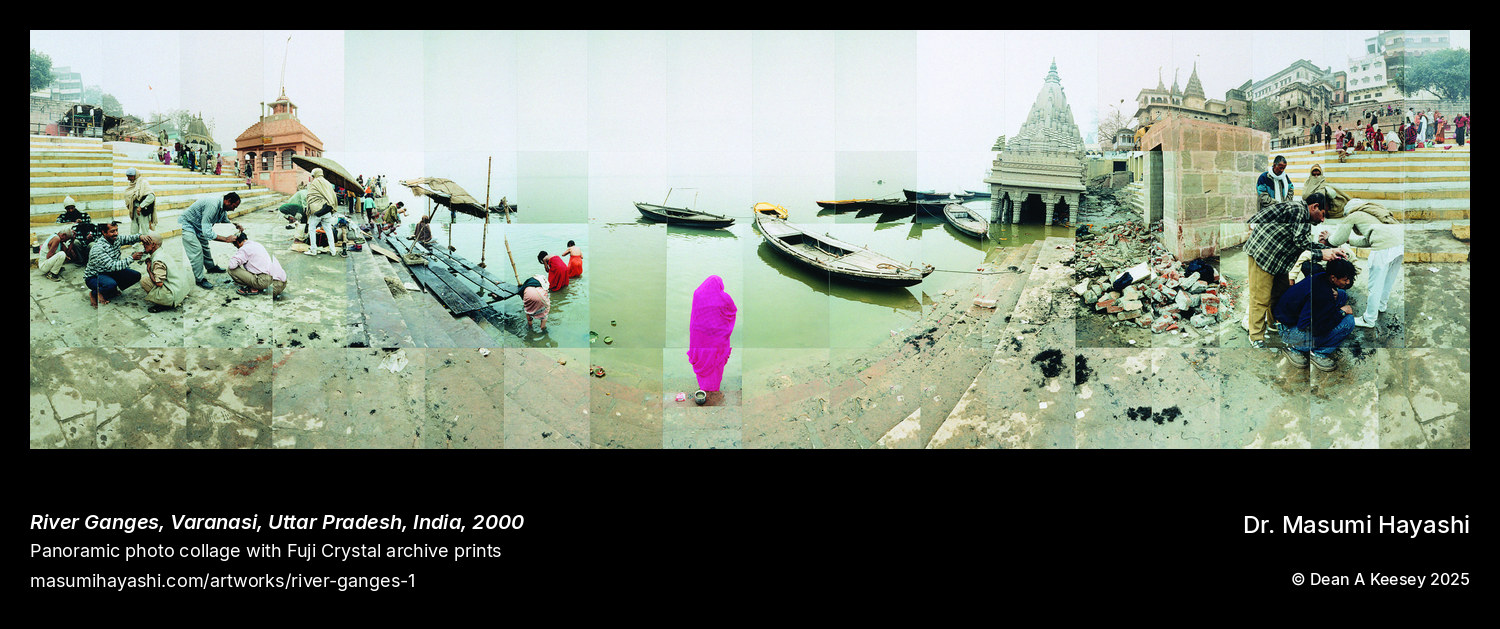
This extreme vertical 19-by-62-inch panorama documents the River Ganges at Varanasi—Hinduism’s holiest city where death promises liberation, where cremation fires burn continuously on the ghats, and where the Ganges descends from heaven through Shiva’s hair to purify the earthly realm. The over-five-foot height creates one of the Sacred Architectures series’ tallest compositions, the extreme vertical format capturing the ghats’ architectural cascade from city streets through stepped terraces to river’s edge.
Created in 2000, the work represents perhaps the series’ most sacred subject—not a single temple but an entire sacred landscape where urban architecture, river geography, and continuous ritual create space unlike any other on earth. Varanasi’s ghats stretch three miles along the Ganges’ western bank, their stepped stone terraces accommodating every aspect of Hindu religious life: morning devotees descending for ritual bathing, cremation pyres consuming bodies at the burning ghats, evening aarti ceremonies illuminating the riverside, and pilgrims from across India seeking the auspicious death that Varanasi promises.
The vertical format documents what horizontal compositions cannot: the spatial relationship between city and river, the descent from urban fabric through architectural terraces to sacred waters, the vertical hierarchy organizing Varanasi’s riverfront into distinct zones. Upper levels contain temples, ashrams, and palaces; intermediate terraces provide gathering spaces; lower steps reach water that devotees believe flows directly from heaven.
Varanasi’s antiquity rivals any continuously inhabited city—the Buddha preached his first sermon at nearby Sarnath; Mark Twain called it “older than history, older than tradition, older even than legend.” The city’s sacredness derives from geography (the Ganges’ only northward bend creating auspicious orientation), mythology (Shiva’s presence establishing cosmic significance), and accumulated devotion (centuries of pilgrims blessing the waters through continuous worship).
The extreme narrowness echoes the constricted ghat architecture where buildings crowd to river’s edge, the vertical strip format mirroring the riverfront’s actual spatial experience.