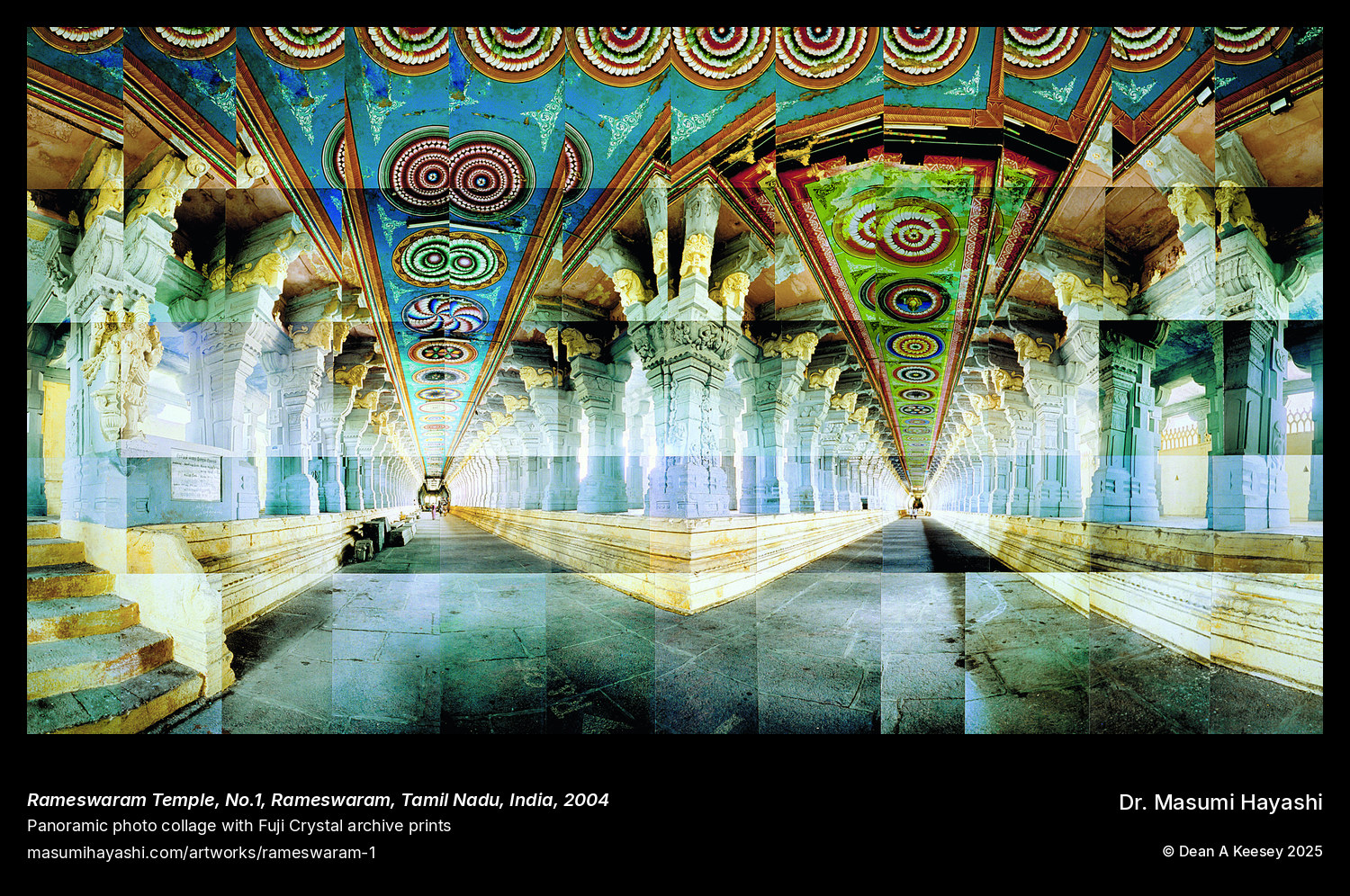
Rameswaram Temple
Rameswaram, Tamil Nadu, India
Panoramic Photo Collage
2004
41" x 23"
The Ramanathaswamy Temple claims the longest temple corridors on Earth—197 meters of repetitive perspective created by 1,212 massive pillars marching toward vanishing points. Walk through these galleries and architectural infinity becomes physical experience: pillar, space, pillar, space, light and shadow patterns extending beyond sight.
This is both Jyotirlinga shrine (one of twelve most sacred Shiva sites in India) and Ramayana landscape. Hindu tradition holds that Rama worshipped Shiva here before crossing to Lanka to rescue Sita. The island location matters—sitting at India’s southeastern tip where geological formations (Adam’s Bridge) stretch toward Sri Lanka, interpreted as remnants of Rama’s bridge. Myth becomes geography; pilgrimage follows epic narrative.
Temple inscription records staggering institutional scale: 12,640 temple personnel, 66,625 external support staff, 79,365 total people serving this single complex in the 12th century. Such numbers reveal Angkorian-level wealth and organization—massive agricultural surplus supporting non-farming religious populations through sophisticated administrative systems.
Pilgrims today still follow ancient ritual: sea bathing at Agni Theertham, ablutions at 22 sacred wells throughout the complex, circumambulation through those endless corridors. The architecture serves its original function despite eight centuries of use.
Masumi photographed in 2004, documenting Dravidian temple architecture at extraordinary scale. Her horizontal panoramic format captures what the corridor demands—not height, but length. The repetitive rhythm of columns creating perspective effects unique to Tamil temple design.