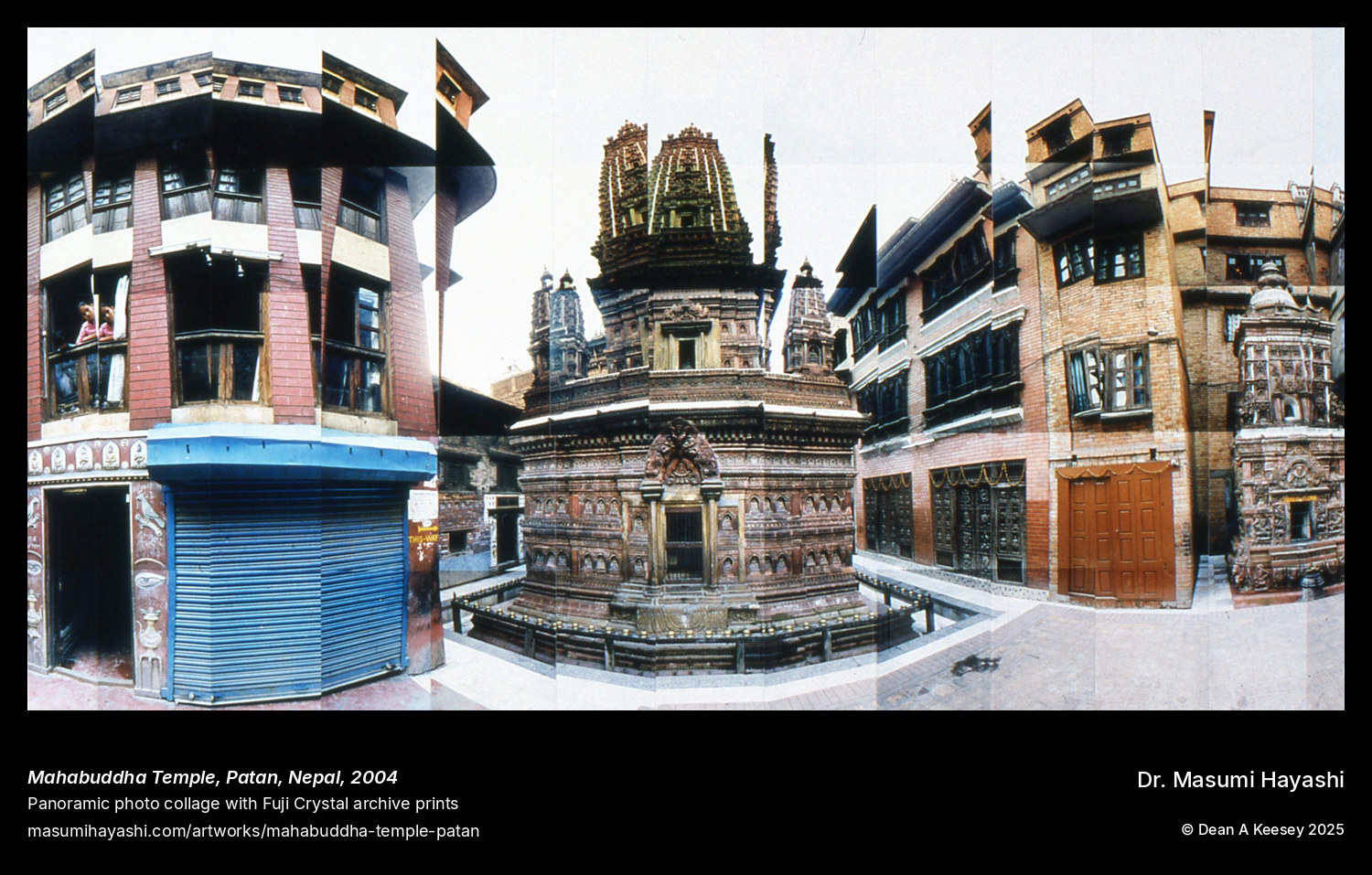
Maha buddha Temple, Patan, Nepal
Patan, Nepal
Panoramic Photo Collage
2004
45" x 22"
This 45-by-22-inch horizontal panorama documents a Buddhist temple or monastery in Patan, the “City of Beauty” historically known as a center of Newari Buddhism despite increasing Hindu political dominance across centuries. The moderate horizontal format—nearly four feet wide—suits documentation of monastic courtyard architecture or temple facades where lateral extent rather than vertical emphasis dictates composition.
Created in 2004, the work represents one of four confirmed Nepal photographs from that year, suggesting a concentrated photographic journey systematically documenting Kathmandu Valley sacred architecture. Patan maintained strong Buddhist traditions through distinctive Newari practices: hereditary Shakya and Vajracharya families preserving Buddhist rituals through caste systems, Mahayana-Vajrayana synthesis creating unique doctrinal traditions, and architectural preservation of medieval Buddhist monasteries within the urban fabric.
Traditional Newari Buddhist architecture emphasizes the bahal form—rectangular enclosed courtyards entered through ornate doorways, with central shrines housing Buddha images surrounded by residential quarters for families maintaining the temple. Stone paving, prayer wheels, and secondary shrines distributed around courtyards create concentrated environments where woodcarving, metalwork, and stone sculpture demonstrate centuries of artistic refinement. The horizontal format would capture courtyard lateral extent, flanking structures, and relationships between central shrines and surrounding architectural elements.
Patan’s Buddhist heritage includes numerous significant monasteries and temples dating to the Licchavi period (fifth-to-ninth centuries CE) when royal patronage supported extensive Buddhist scholarship and artistic workshops producing sculpture, metalwork, and ritual objects. Unlike regions where Buddhism declined following Muslim invasions or Hindu revivals, Patan maintained living Buddhist traditions integrating Hindu deities and practices within Buddhist frameworks. The 2004 documentation preserves pre-2015-earthquake architectural states—many traditional brick and wooden structures suffered damage in the Gorkha earthquake, making Hayashi’s photographs valuable historical records.