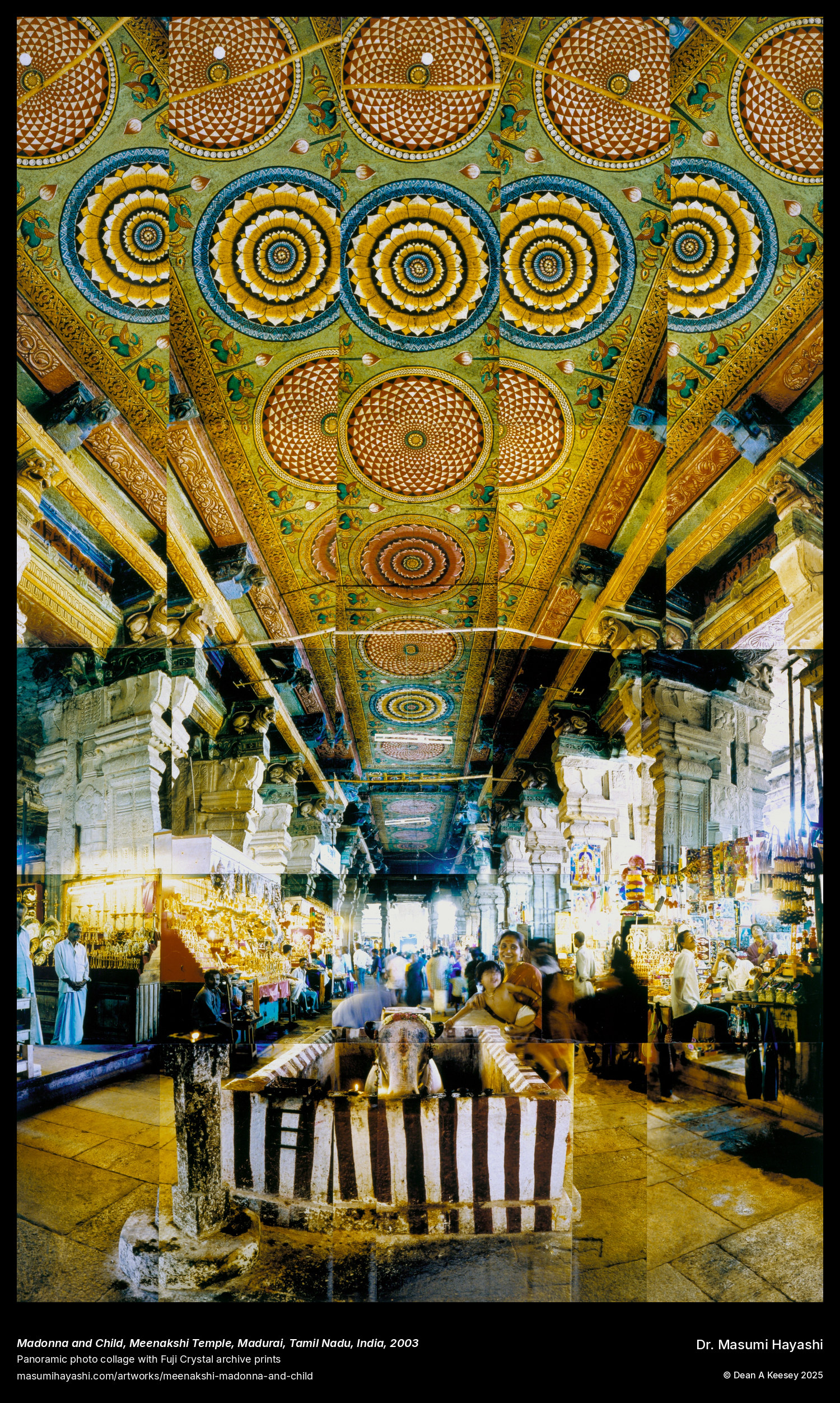
Madonna and Child, Meenakshi Temple, Madurai, Tamil Nadu, India
Madurai, Tamil Nadu, India
Panoramic Photo Collage
2003
17" x 27"
This 17-by-27-inch vertical panorama documents Meenakshi Temple in Madurai through a title evoking Catholic iconography—the artist recognizing compositional parallels between Hindu goddess sculpture and Christian Madonna and Child imagery, demonstrating how distinct religious traditions employ similar visual vocabulary expressing universal maternal divine archetypes.
The Meenakshi Amman Temple represents the pinnacle of Tamil Nadu’s Dravidian temple architecture, a fourteen-acre complex dominated by towering gopurams—gateway towers rising over 170 feet and covered with thousands of painted stucco sculptures depicting deities, mythological narratives, and protective guardians. The sixteenth-and-seventeenth-century Nayak dynasty created the current magnificent form following earlier destructions by Islamic invasions, commissioning massive gopurams and expanded enclosures that transformed Madurai into a pilgrimage destination rivaling Varanasi.
The temple honors goddess Meenakshi, a Tamil form of Parvati depicted with fish-shaped eyes, and her consort Sundareshwar, a form of Shiva. Uniquely among major Hindu temples, the goddess receives primary veneration rather than the male deity, reflecting Dravidian goddess-centered traditions predating northern Hindu influence. The complex maintains intense ritual life—daily worship ceremonies, annual festivals including the Chithirai celebration of Meenakshi and Sundareshwar’s divine marriage, and thousands of pilgrims visiting shrines positioned within concentric rectangular enclosures creating progressive sacred zones.
Created in 2003, the work reflects Hayashi’s South Indian documentation campaign that same year, when she photographed both Tamil Nadu and Karnataka temple sites. The vertical format suggests documentation of a gopuram’s towering presence, sculptural reliefs distributed across height, or specific mother-and-child imagery on temple walls where Hindu and Christian visual traditions converge in form if not theology. Zero foundation inventory indicates complete edition placement—all five editions sold or donated, representing exceptional commercial success unusual within Hayashi’s oeuvre.