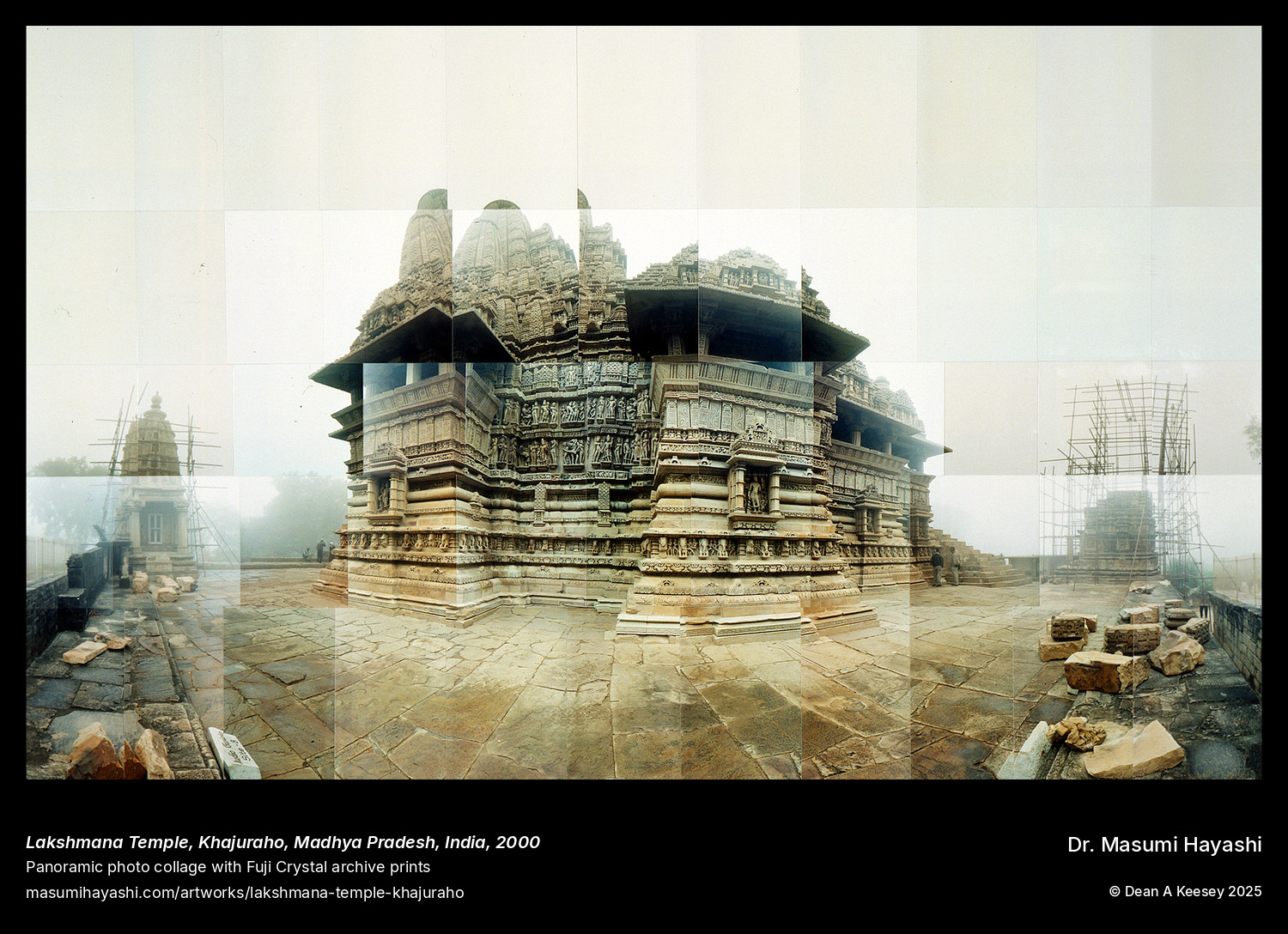
Lakshmana Temple, Khajuraho, Madhya Pradesh, India
Khajuraho, Madhya Pradesh, India
Panoramic Photo Collage
2000
24 x 37
This 24-by-37-inch vertical panorama documents the Lakshmana Temple, the oldest surviving structure at Khajuraho, completed in 954 CE during the reign of Chandella dynasty King Yashovarman. Seventy years before the more famous Kandariya Mahadeva, this temple established the architectural vocabulary that subsequent Khajuraho builders would refine: elevated stepped platform creating monumental presence, cruciform plan with projecting transepts, multiple subsidiary shrines at platform corners, and comprehensive sculptural programs transforming stone into theological encyclopedia.
The temple’s dedication to Vaikuntha Vishnu—Vishnu enthroned in paradise—reflects royal patronage celebrating military victories through religious endowment. Yashovarman commissioned this monument following successful campaigns against rival kingdoms, the massive stone structure proclaiming Chandella authority and piety. The exterior bears extensive Vaishnava iconography: Vishnu’s ten avatars including the boar incarnation rescuing the earth goddess, Krishna narratives from sacred texts, and the original sanctum image showing Vishnu with three heads representing multiple divine forms.
The panchayatana plan positions the main shrine at the center of an elevated jagati platform approximately four meters high, with four subsidiary shrines at the cardinal points. This elevation creates dramatic approach—steep stairs ascending to platform level where circumambulation paths enable ritual clockwise walking around the complex. The platform itself becomes sacred geography, separating devotional space from ordinary ground.
Like all Khajuraho temples, Lakshmana bears erotic mithuna sculptures distributed among hundreds of carved figures covering every exterior surface. These represent approximately ten percent of the total sculptural program, integrated within broader depictions of gods, goddesses, celestial dancers, mythological narratives, and decorative patterns. The carvings document medieval Hindu understanding that incorporated sexuality within legitimate religious expression rather than excluding physical pleasure from spiritual life.
Created in 2000 alongside Kandariya Mahadeva, this work demonstrates Hayashi’s systematic approach to complex temple sites, documenting architectural chronology from tenth-century origins through eleventh-century culmination.