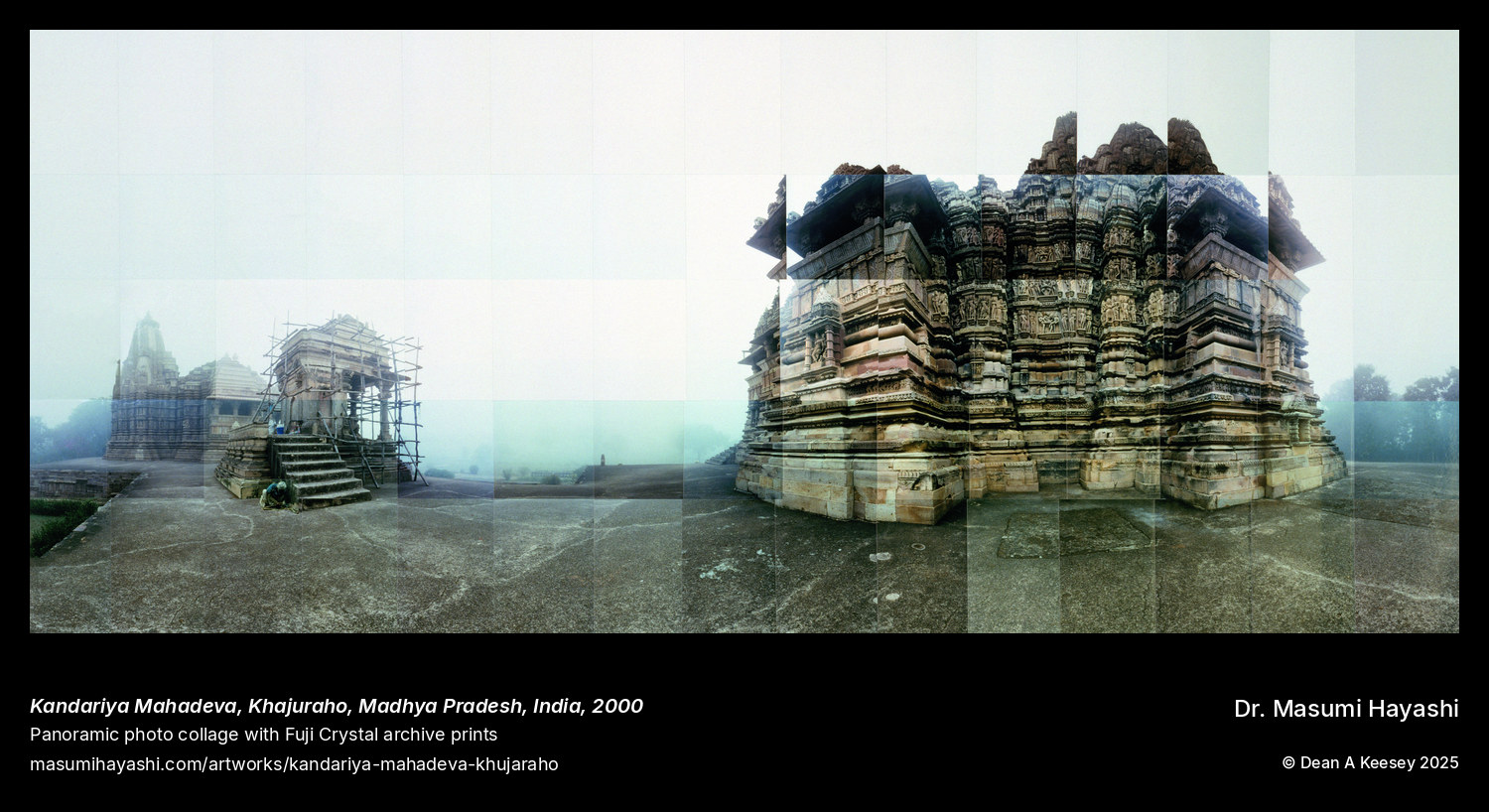
Kandariya Mahadeva, Khujaraho, Madhya Pradesh, India
Khajuraho, Madhya Pradesh, India
Panoramic Photo Collage
2000
30 x 59
This 30-by-59-inch vertical panorama documents Kandariya Mahadeva, the largest and most architecturally sophisticated temple at Khajuraho—the UNESCO World Heritage Site in central India preserving twenty-five surviving medieval Hindu temples from the Chandela dynasty’s cultural florescence. The nearly five-foot height captures the temple’s soaring shikhara tower rising 102 feet through graduated peaks symbolizing Mount Meru, the cosmic mountain in Hindu cosmology.
Constructed circa 1025-1050 CE during King Vidyadhara’s reign, the temple represents the pinnacle of Nagara architectural style—North Indian temple design characterized by curvilinear towers composed of horizontal bands creating rhythmic upward movement. The structure bears approximately 870 carved figures distributed across three horizontal registers covering every exterior surface: gods and goddesses, celestial dancers applying cosmetics and jewelry, guardian deities protecting cardinal directions, and the famously erotic mithuna couples that have made Khajuraho internationally recognized and perpetually controversial.
The erotic sculptures, representing approximately ten percent of total carvings, depict couples engaged in sexual acts ranging from modest embraces to explicit intercourse. Within Hindu tantric philosophy flourishing in medieval India, these images celebrated sexuality as a sacred spiritual practice when performed with awareness and devotion—divine union mirroring cosmic creation, kama (desire) recognized as one of four legitimate life goals alongside dharma, artha, and moksha. Pre-colonial Hindu culture maintained more sexually open attitudes than Victorian British morality later imposed, and Khajuraho’s temple architecture incorporated the full spectrum of human experience without separating sacred and profane.
The vertical format emphasizes the shikhara’s upward thrust from elevated platform through subsidiary peaks to the finial crowning the summit, replicating the devotee’s experience gazing upward at towering architecture designed to direct spiritual attention toward transcendence. Created in 2000 as part of Hayashi’s systematic documentation of India’s major religious traditions, the work captures one of medieval Hinduism’s supreme architectural achievements.