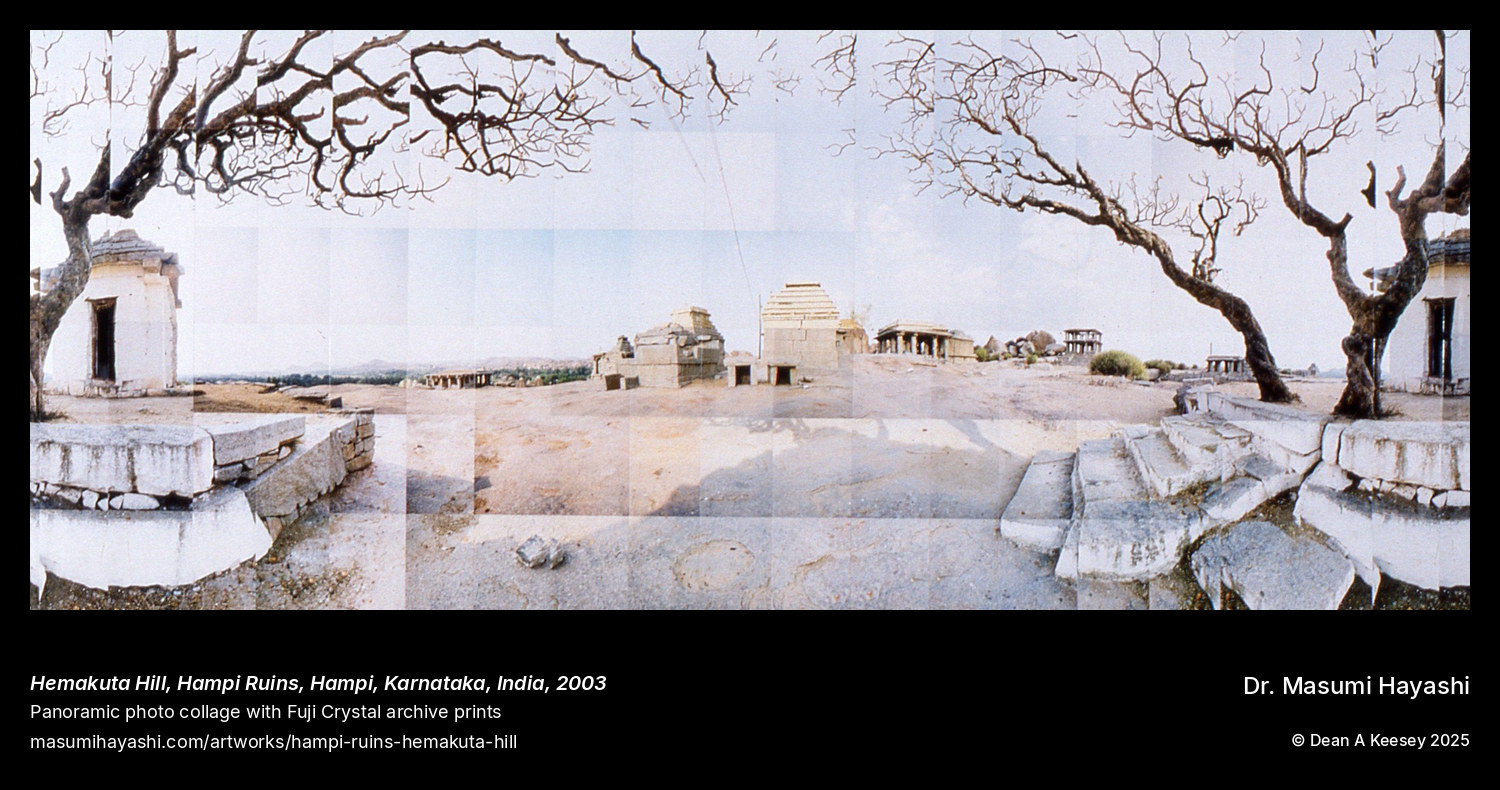
Hemakuta Hill, Hampi Ruins, Hampi, Karnataka, India
Hampi, Karnataka, India
Panoramic Photo Collage
2003
73" x 28"
This extraordinary 73-by-28-inch horizontal panorama documents the sacred hilltop temple cluster at Hemakuta Hill in Hampi, Karnataka—one of the Sacred Architectures series’ most expansive lateral sweeps. The extreme format, exceeding six feet in width, captures what concentrated vertical compositions cannot: the scattered geography of devotion across elevated terrain where dozens of small shrines nestle among massive granite boulders.
Created in 2003, the work reflects Hayashi’s sustained engagement with the UNESCO World Heritage Site that preserves the ruins of the Vijayanagara Empire’s fourteenth-to-sixteenth-century capital. But Hemakuta Hill’s religious significance predates imperial grandeur—archaeological evidence indicates ninth-and-tenth-century temple construction here, suggesting sacred continuity across centuries. The Vijayanagara rulers recognized this sanctity, maintaining and elaborating existing shrines rather than rebuilding entirely.
The hill rises southwest of the monumental Virupaksha Temple, its elevation offering commanding views across Hampi’s architectural landscape—temple complexes to the northeast, the Tungabhadra River valley beyond, and boulder-strewn plains extending toward distant horizons. This topographic prominence carries theological weight: elevation signifies divine proximity, the hilltop positioning worshipers closer to transcendent realms.
Unlike the concentrated architectural density of major temple complexes, Hemakuta Hill presents distributed sacred architecture—modest single-chamber shrines housing Shiva lingas, pillared pavilions providing congregation space, stepped platforms accommodating the terrain’s natural contours. The temples integrate with geological formations, positioned among, between, and atop boulders in architectural-geological dialogue. The extreme horizontal format documents this lateral scatter, the temple cluster’s distribution across hilltop terrain demanding comprehensive sweep impossible through conventional framing.
The work represents the first of Hayashi’s multi-year Hampi documentation. She returned in 2004 to photograph individual mantapa structures in vertical format, demonstrating systematic coverage understanding the site’s complexity required multiple perspectives and scales. The 2003 panoramic vista establishes architectural context; subsequent close studies examine devotional architecture’s human dimension.