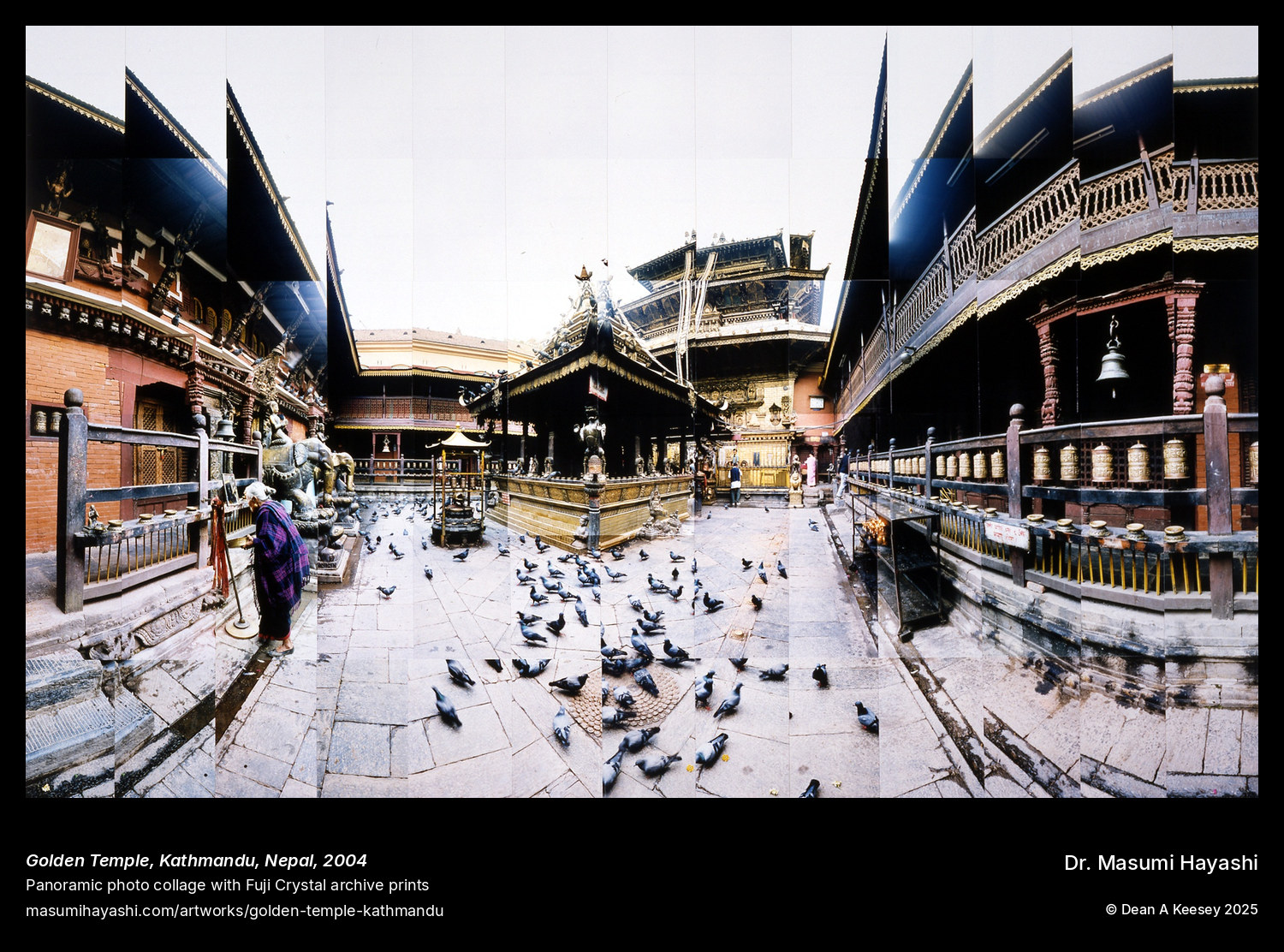
Golden Temple, Kathmandu, Nepal
Kathmandu, Nepal
Panoramic Photo Collage
2004
46" x 29"
In Patan’s dense medieval streets, high walls conceal a 12th-century secret: pass through a single ornate doorway and Kathmandu Valley sunlight detonates against gilded copper facade, creating luminosity so intense it justifies the monastery’s name—Hiranya Varna Mahavihar, the Golden Temple. This isn’t gold leaf delicately applied. It’s hammered copper repoussé covering the three-tiered pagoda-style temple, metalwork craftsmanship Patan perfected over centuries through specialized techniques requiring patience modern metallurgy abandons. Repoussé demands hammering from reverse side to create raised relief visible from front, then chasing details from the front surface, then periodic re-gilding maintaining appearance against oxidation and weather. The result: architectural surface that doesn’t merely reflect light but seems to generate it, creating otherworldly presence within bounded courtyard entered through that single doorway.
Newari Buddhist architecture achieves what expansive Hindu temple complexes and grand royal palace squares cannot: sacred intensity through spatial compression. The bahál courtyard design creates enclosed precinct where surrounding walls block external chaos, concentrating attention on central shrine, carved wooden struts supporting tiered roofs, stone sculptures positioned throughout the bounded space. Unlike monumentality achieved through scale, this is power through enclosure, through transformation that happens when stepping from street chaos into protected courtyard where gilt copper announces that ordinary space has ended, sacred precinct begun.
The monastery maintains living function despite tourist pressure. Hereditary temple guardians from Shakya families perform daily rituals. Buddhist festivals fill the courtyard with ceremonies. Pilgrims circumambulate the central shrine continuing traditions the 12th-century founders established. This distinguishes the Golden Temple from heritage monuments becoming primarily tourist attractions—here, preservation serves ongoing worship rather than worship serving preservation tourism. The difference matters. Buildings used for original purposes age differently than buildings converted to museums, develop different patinas, accumulate different meanings through continued devotional practice versus discontinued tradition commemorated through interpretation panels.
Hayashi photographed this in 2004, two years before her death, demonstrating sustained Sacred Architectures commitment through final active years. The 46-by-29-inch moderate horizontal format suits rectangular courtyard documentation where facades face inward creating compositional emphasis on central shrine and surrounding monastic buildings. The format captures spatial enclosure rather than monumental expanse, acknowledging that not all sacred architecture organizes power through size. Sometimes compression matters more than extension, sometimes walls that exclude create intensity unavailable to open complexes that welcome everything.
Eleven years later, the 2015 Gorkha earthquake devastated Nepal, damaging or destroying thousands of historic structures across Kathmandu Valley. This photograph potentially preserves pre-earthquake architectural state, documenting what existed before the ground shook hard enough to topple 900-year-old stupas, collapse temple roofs, crack masonry that had survived centuries. The archival significance extends beyond artistic achievement. When earthquakes strike regions where historic architecture predates modern structural engineering, photography becomes evidence of what was, what might be rebuilt, what engineering modifications altered or preserved. Hayashi’s documentation wasn’t intentionally disaster preparedness. But when the ground moves and gilded facades crack, when wooden struts supporting tiered roofs fail, when stone sculptures throughout enclosed precincts topple from their foundations, photographs become arguments about reconstruction authenticity, about how to rebuild what earthquake destroyed while maintaining relationships between original materials, traditional techniques, and contemporary structural requirements that might prevent future collapse.