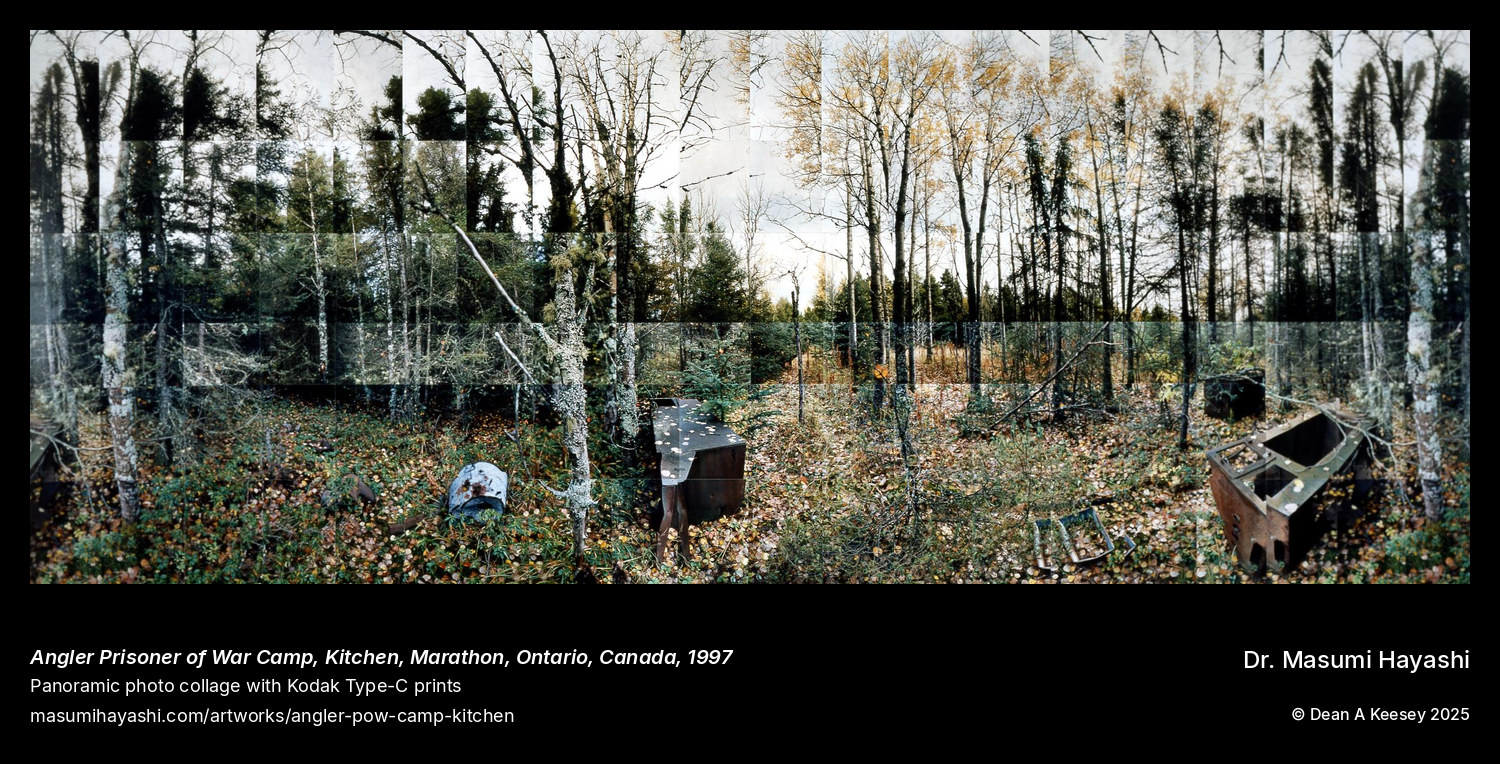
Angler Prisoner of War Camp, Kitchen
Marathon, ON, Canada
Panoramic photo collage with Kodak Type-C prints
1997
36 x 78
This monumental 36-by-78-inch horizontal panorama documents the kitchen facilities at Angler Prisoner of War Camp—the space where meals were prepared for prisoners held in this northern Ontario facility. The six-and-a-half-foot width captures the institutional scale of food preparation for a population that included German prisoners of war and later Japanese Canadian men imprisoned for resisting government orders.
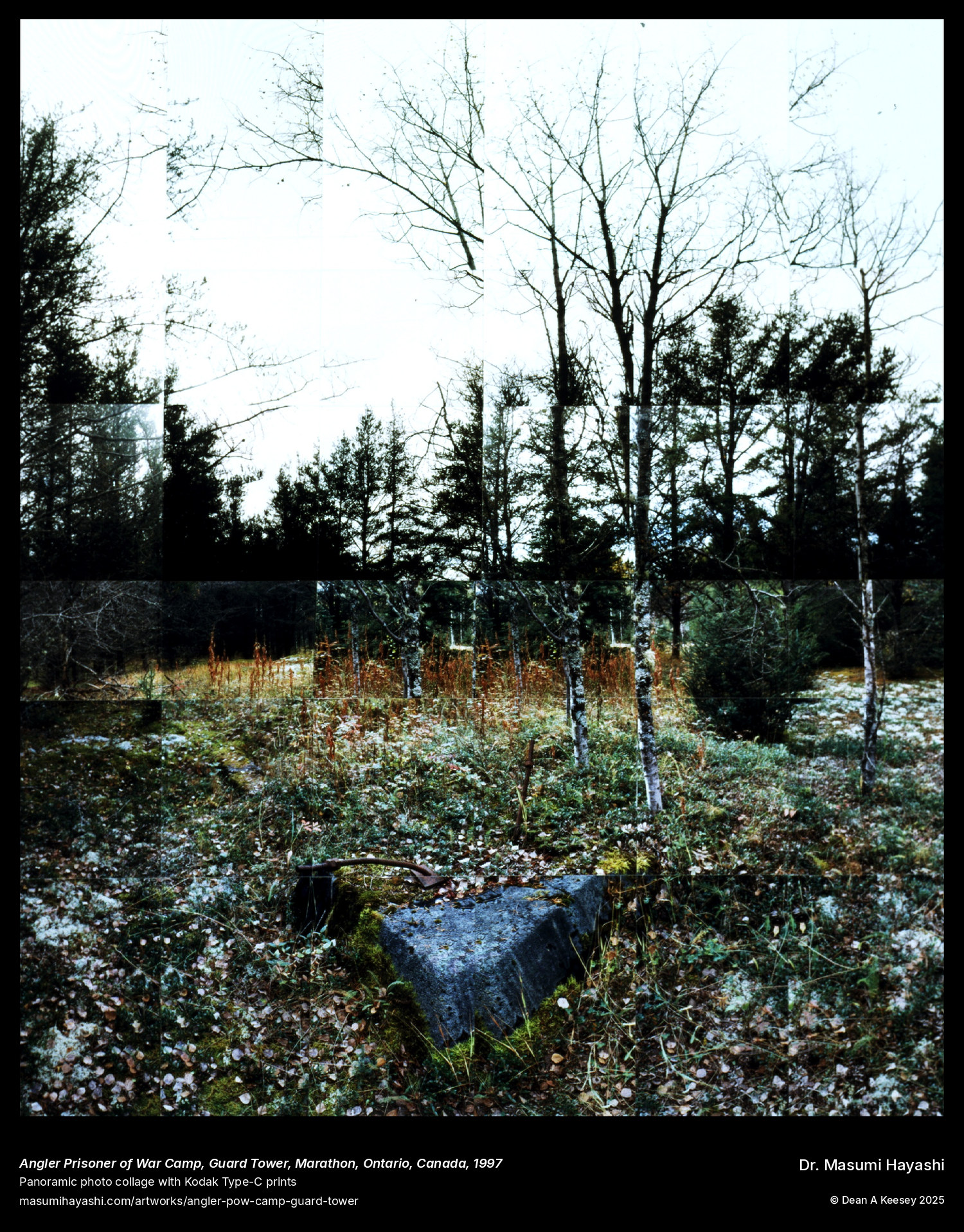
Created in 1997, the work complements the Guard Tower documentation at the same site, together revealing both the surveillance infrastructure and daily sustenance systems that made incarceration operational. The kitchen represents labor as much as nourishment: prisoners often worked in such facilities, their labor contributing to the functioning of the system that imprisoned them.
The kitchen’s survival across five decades after the camp’s closure provides rare access to interior spaces typically demolished when camps were dismantled. The institutional architecture—designed for efficiency rather than comfort—reveals the minimal standards applied to prisoner welfare. The large-scale food preparation equipment documents the industrial approach to feeding confined populations.
The extreme horizontal format captures the kitchen’s linear workflow: receiving, storage, preparation, cooking, and service areas arranged for efficiency. The photo collage technique fragments this institutional space while revealing its spatial organization, the assembled composition documenting architecture designed for function under constraint.
Angler’s kitchen fed multiple populations across the camp’s history, its equipment and facilities serving whoever the Canadian government chose to imprison in this remote northern location. The work documents infrastructure that made incarceration sustainable, the daily meal service enabling prolonged detention.
This work documents Canadian Concentration Camps, one of the concentration camps where Japanese Americans were incarcerated during World War II.
Part of the American Concentration Camps project