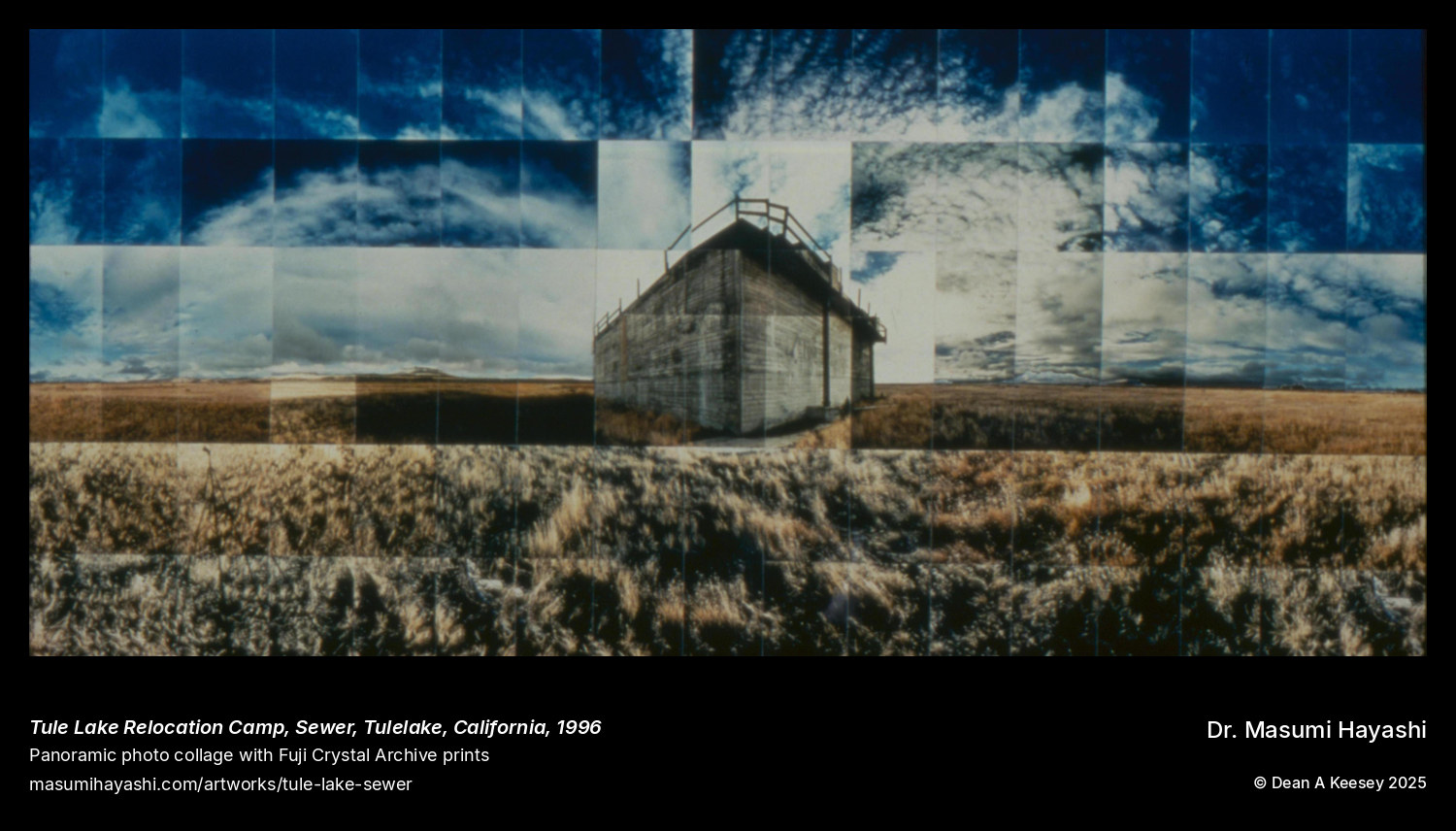
Tule Lake Relocation Camp, Sewer
Tule Lake, CA, USA
Panoramic photo collage with Fuji Crystal Archive prints
1996
32 x 59
This horizontal 32-by-59-inch panorama documents the sewer infrastructure at Tule Lake Relocation Center—the largest and most controversial of the War Relocation Authority camps, transformed in 1943 into a “segregation center” for internees deemed “disloyal” based on coerced questionnaire responses. The five-foot width captures utilitarian engineering that enabled the imprisonment of up to 18,000 Japanese Americans in northeastern California’s high desert.
Created in 1996, the work continues Hayashi’s documentation of surviving infrastructure—the unglamorous engineering that enabled mass incarceration while barracks and guard towers disappeared. The sewer system’s persistence creates ironic memorial: the mechanism for processing human waste surviving when structures housing human beings have vanished.
Tule Lake’s transformation into segregation center created the harshest conditions in the WRA system. Those who answered “no-no” to loyalty questionnaire questions—or refused to answer questions whose only purpose was enabling government categorization—were concentrated at Tule Lake, subjected to increased surveillance, reduced privileges, and the threat of deportation to Japan regardless of citizenship status.
The camp’s location in the Modoc Lava Beds’ shadow created harsh living conditions: volcanic soil, extreme temperatures, isolation from population centers. The military takeover in late 1943 increased tension, culminating in strikes, work stoppages, and violent suppression. Tule Lake’s history represents incarceration’s darkest chapter—Americans punished for asserting constitutional rights through resistance or refusal.
The horizontal format captures the sewer system’s sprawling extent, the infrastructure required for a population approaching 20,000 at peak. The engineering achievement serves as metonym for the administrative machinery that processed human beings as problems to be managed rather than citizens deserving rights.
Tule Lake received National Monument designation in 2008, formally recognizing that sites of injustice require preservation alongside sites of triumph.