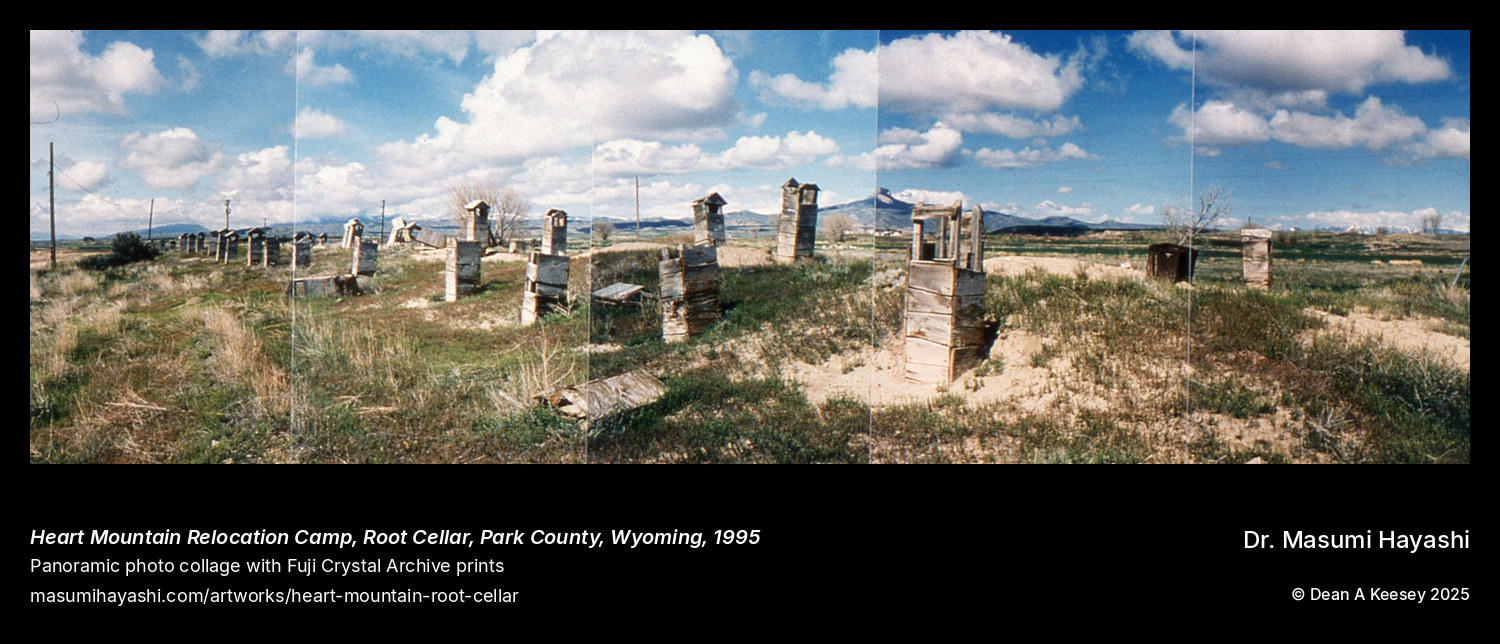
Heart Mountain Relocation Camp, Root Cellar
Park County, WY, USA
Panoramic photo collage with Fuji Crystal Archive prints
1995
20 x 70
This horizontal 20-by-70-inch panorama documents a root cellar at Heart Mountain Relocation Center—underground storage that internees constructed for preserving vegetables through Wyoming’s extreme winters. The nearly six-foot width creates unusual proportions for documenting compact domestic infrastructure, the horizontal sweep emphasizing the cellar’s landscape context rather than its intimate construction.
Created in 1995, the work complements Heart Mountain’s hospital and interior documentation, together capturing institutional, domestic, and agricultural dimensions of camp life. Root cellars represent internee self-reliance: structures built from available materials to supplement inadequate government provisions, the agricultural expertise of Japanese American farmers serving survival despite circumstances designed to strip autonomy.
Heart Mountain’s climate made food preservation essential: winter temperatures plunging to minus thirty degrees, growing seasons limited to brief summer months, government rations designed for minimal subsistence rather than nutritional adequacy. Internees who had farmed California’s most productive agricultural regions applied their expertise to Wyoming’s hostile environment, transforming high desert into cultivated landscape through irrigation and determination.
The root cellar’s persistence while barracks disappeared reflects construction quality: internees built these structures for durability, their investment demonstrating understanding that confinement would extend beyond initial government claims of temporary emergency. Earth-insulated storage provided natural temperature regulation that tar-paper barracks could never achieve.
The extreme horizontal format creates unusual proportions for such compact subject—the six-foot width emphasizing landscape integration rather than architectural detail. The root cellar emerges from surrounding terrain, partially subterranean construction appearing as much landscape feature as built structure.
The work documents agricultural tradition persisting through constitutional violation: farming communities maintaining food preservation practices despite imprisonment, their expertise serving survival when government support proved inadequate.
This work documents Heart Mountain, one of the concentration camps where Japanese Americans were incarcerated during World War II.
Part of the American Concentration Camps project
More from Japanese-American Internment Camps
Gila River Relocation Camp, Dog Grave
Gila River Relocation Camp, Foundations
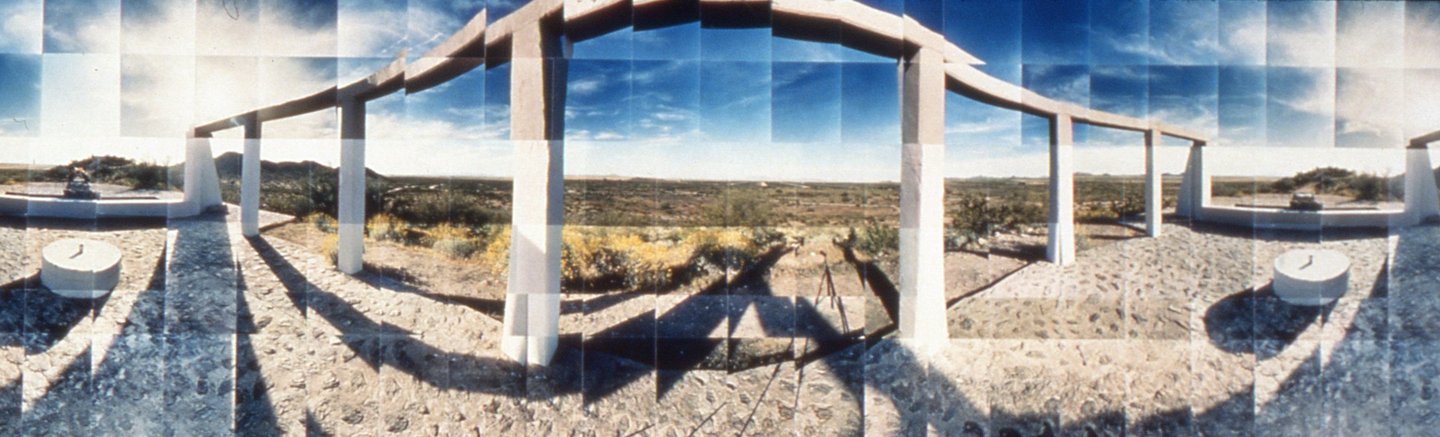
Gila River Relocation Camp, Monument
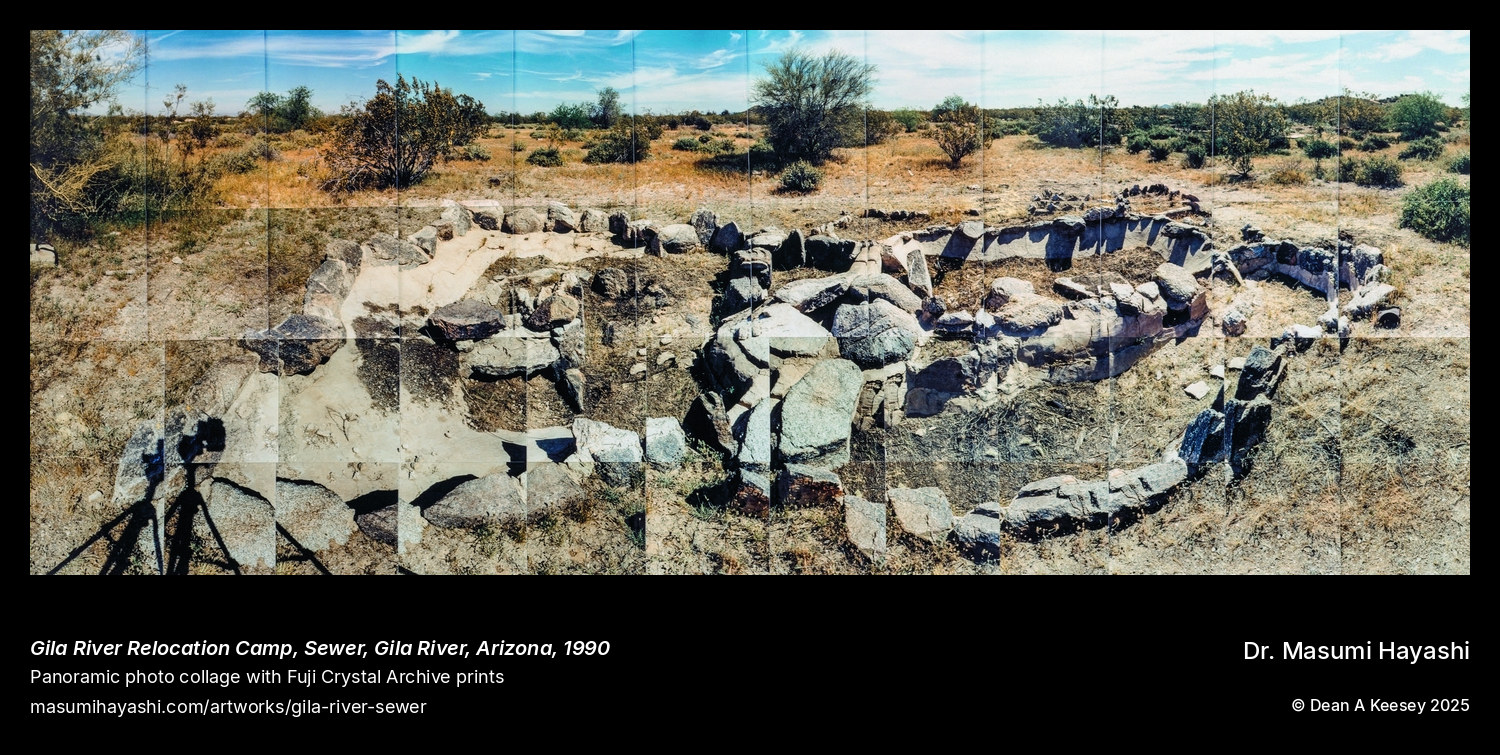
Gila River Relocation Camp, Sewer
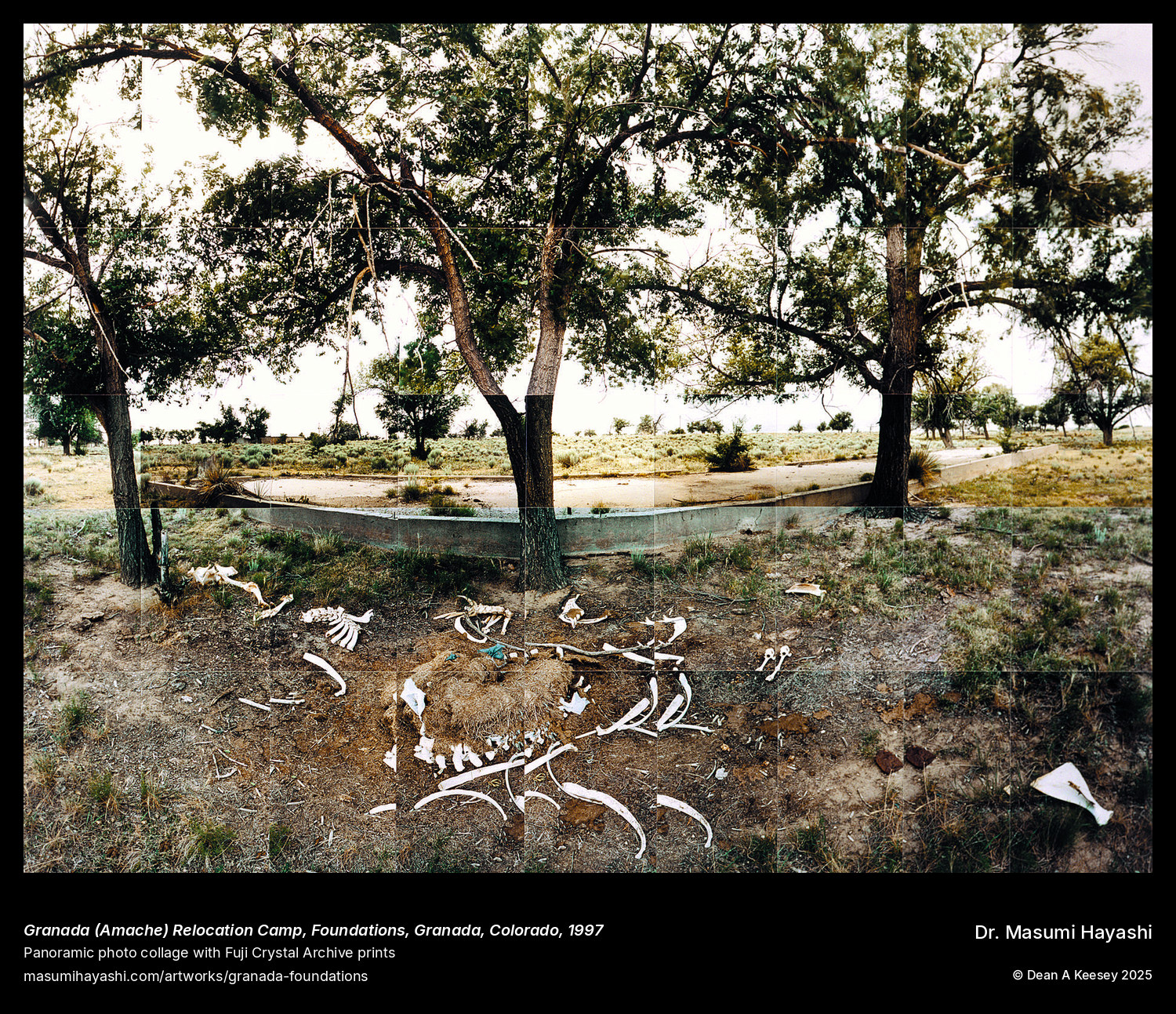
Granada (Amache) Relocation Camp, Foundations