Granada (Amache) Relocation Camp, Foundations
Granada, CO, USA
Panoramic photo collage with Fuji Crystal Archive prints
1997
23 x 31
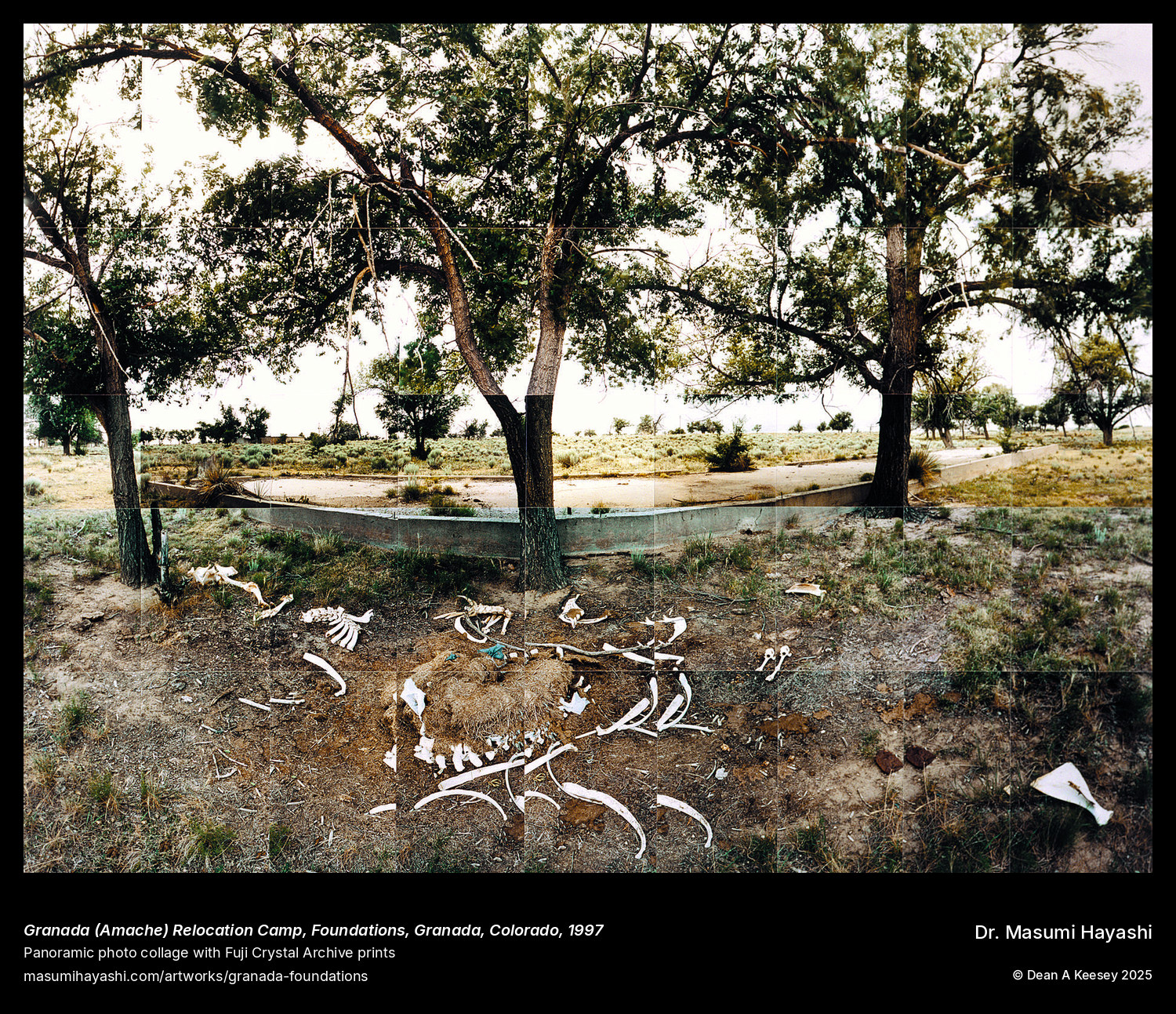
This 23-by-31-inch panorama documents the foundations at Granada (Amache) Relocation Center—concrete rectangles emerging from Colorado prairie marking where barracks once confined 7,300 Japanese Americans from 1942 to 1945. The near-square format suits documentation of grid geometry, the repetitive pattern of foundation slabs visible in concentrated composition.
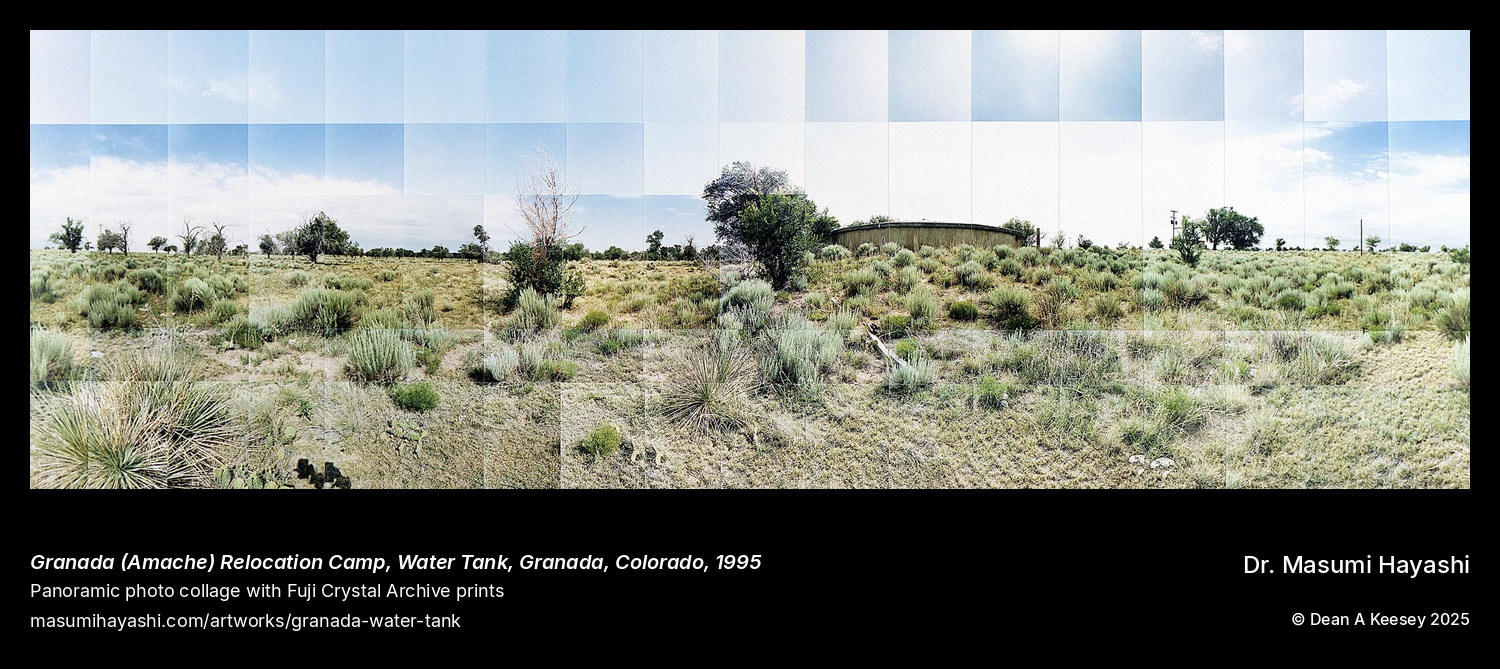
Created in 1997, the work complements the 1995 Water Tank documentation at the same site, together capturing infrastructure and architectural remnants from different phases of Hayashi’s systematic camp coverage. The foundations represent the most common surviving evidence across camp sites: concrete slabs that outlasted the wooden structures they supported, the grid logic of incarceration architecture visible in rectangular outlines.
Granada’s foundations reveal the barracks’ standardized dimensions: 20 by 100 feet divided into six rooms, each room assigned to a family regardless of size. The repetitive geometry visible in surviving concrete documents the dehumanizing systematization that processed 120,000 Americans as interchangeable units requiring identical housing, the architectural uniformity reflecting the racist logic that erased individual identity in favor of categorical imprisonment.
The near-square format contrasts with the extreme horizontal panoramas characterizing most camp documentation, the concentrated composition emphasizing grid pattern rather than landscape extent. The foundations’ emergence from prairie grass documents both historical trauma and nature’s gradual reclamation of sites built for temporary human storage.
Granada achieved National Historic Landmark designation in 2006, federal recognition acknowledging that sites of constitutional violation warrant preservation alongside monuments celebrating achievement. The foundations that Hayashi documented now receive formal protection, the concrete outlines serving as permanent memorial to those imprisoned on Colorado’s high plains.
This work documents Granada (Amache), one of the concentration camps where Japanese Americans were incarcerated during World War II.
Part of the American Concentration Camps project
More from Japanese-American Internment Camps
Gila River Relocation Camp, Dog Grave
Gila River Relocation Camp, Foundations
Gila River Relocation Camp, Monument
Gila River Relocation Camp, Sewer
Granada (Amache) Relocation Camp, Water Tank