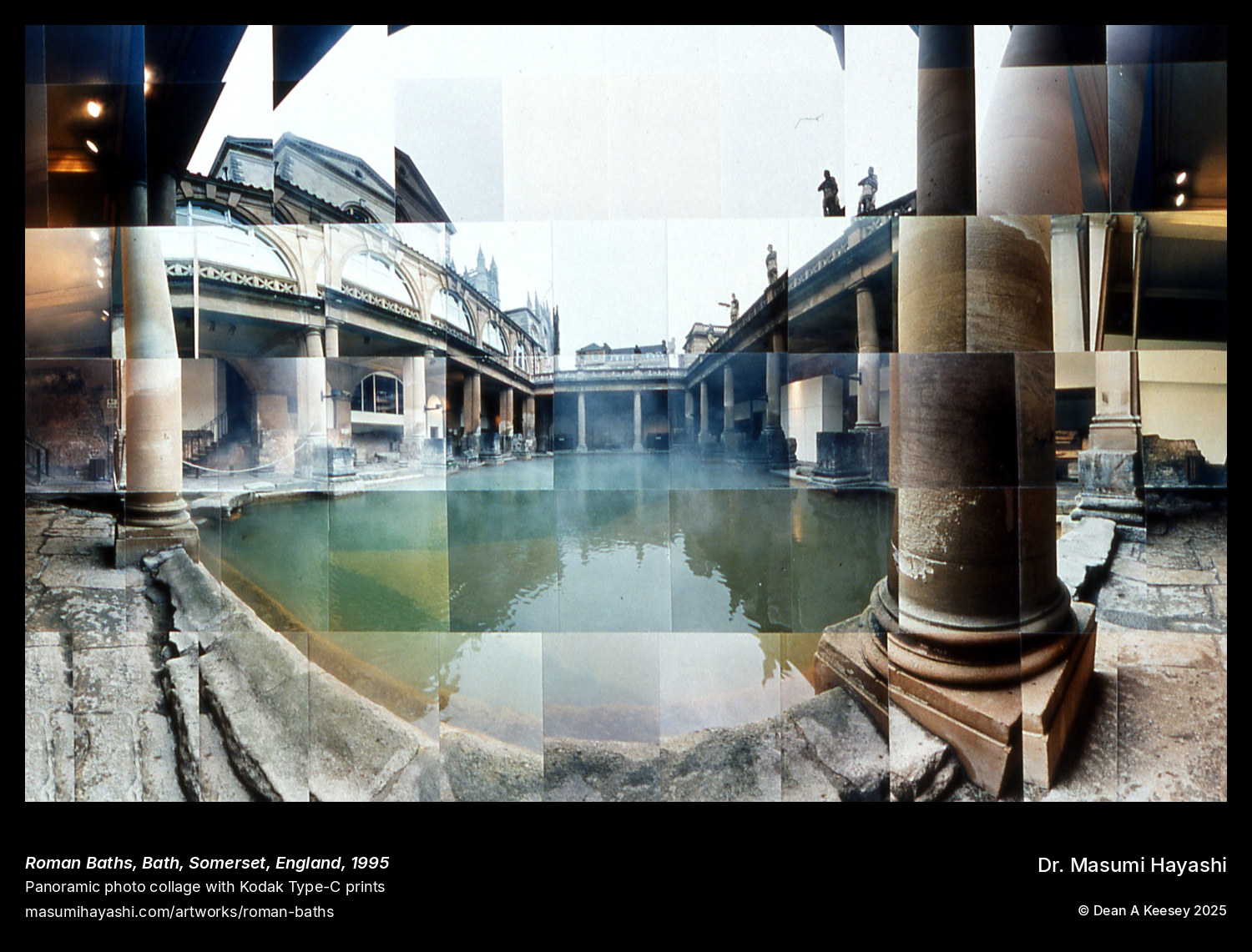
Roman Baths
Bath, Somerset, England
Panoramic photo collage with Kodak Type-C prints
1995
42 x 32
This 42-by-32-inch vertical panorama documents the Roman Baths in Bath, England—the remarkably preserved bathing complex that Romans constructed around natural hot springs nearly two thousand years ago. The vertical format emphasizes the Great Bath’s depth and the Victorian architecture surrounding this ancient site.
Created in 1995, the work represents Hayashi’s documentation of sacred architecture extending to European antiquity. The Roman Baths complex, built around 60 AD, served both hygienic and religious purposes: the hot springs were dedicated to the goddess Sulis Minerva, and bathing was a sacred as well as social activity. The site remained buried and forgotten until eighteenth-century rediscovery.
The vertical format captures the relationship between the ancient pool and the Victorian terrace statues and buildings that now surround it. Georgian Bath developed above the Roman site, the eighteenth-century city drawing visitors to “take the waters” without understanding the Roman complex beneath their feet. Today’s presentation layers Roman ruins, medieval additions, and Victorian interpretation.
The photo collage technique proves particularly effective for documenting this architectural palimpsest, fragmenting and reassembling a site where multiple eras coexist. The steaming water—still flowing at 46°C from springs over 10,000 feet underground—creates atmospheric conditions that enhance the assembled composition’s mystery.
Bath’s Roman heritage contributes to its UNESCO World Heritage status, the ancient bathing complex preserved within the Georgian city that claimed the same therapeutic waters. This panorama documents the intersection of Roman engineering, medieval memory, and modern tourism at England’s most significant Roman site.